The way regulated firms are expected to monitor for financial crime is changing. Regulators are increasingly pushing toward continuous, dynamic risk intelligence rather than periodic, point-in-time checks. A firm that screens a customer only at onboarding, or runs monitoring as an occasional batch exercise, is falling behind what supervisors now expect. Modern AML software is what makes continuous screening and monitoring practical, and understanding what it does helps a firm meet the standard without drowning its compliance team in manual work.
Why Periodic Checks Are No Longer Enough
Financial crime risk is not static. A customer who was low-risk at onboarding can become high-risk later: they may appear on a sanctions list, become a politically exposed person, or start transacting in ways that do not fit their profile. Checking only at onboarding, or only occasionally, leaves gaps during which risk goes unnoticed. Regulators have recognised this, and the direction of guidance is toward ongoing monitoring and screening that catches changes as they happen. This is what dynamic risk intelligence means: the firm’s view of each customer’s risk is kept current, not frozen at the moment they were onboarded.
What Good AML Software Actually Does
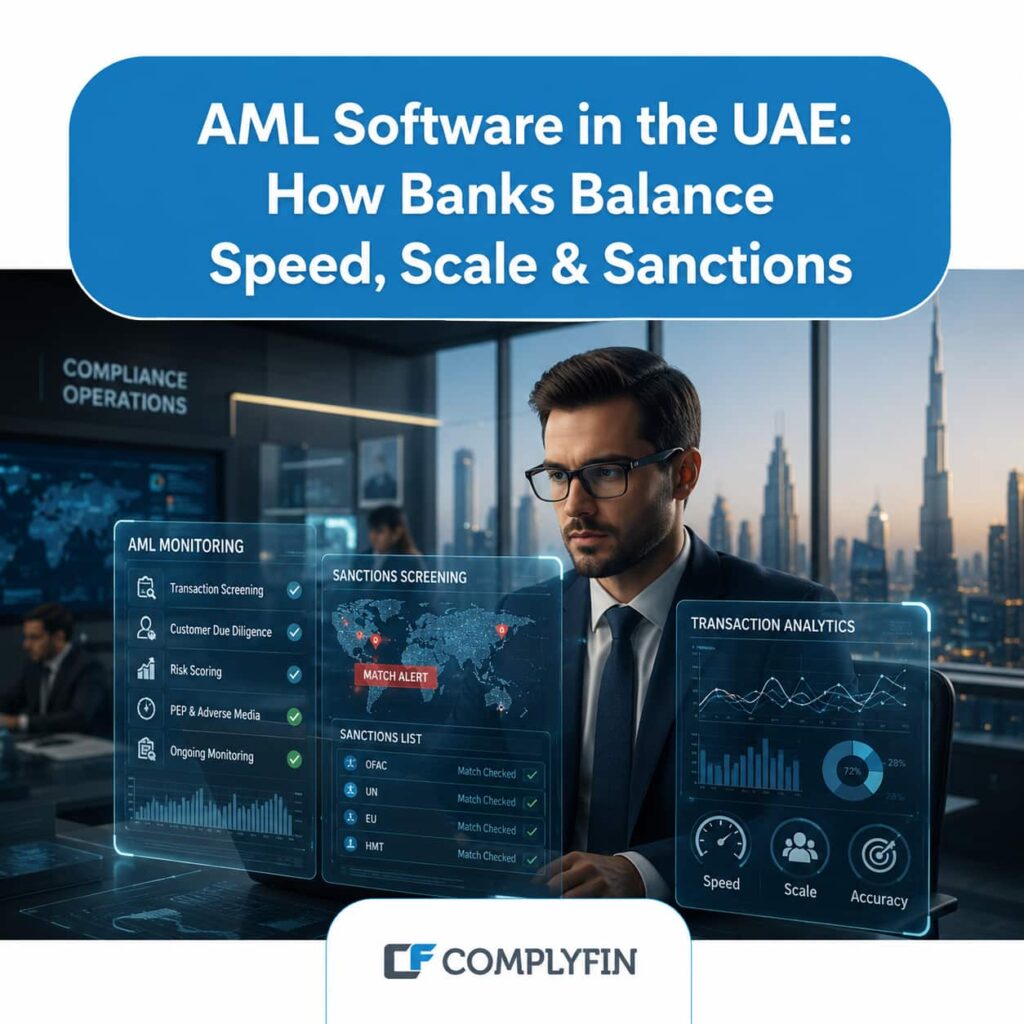
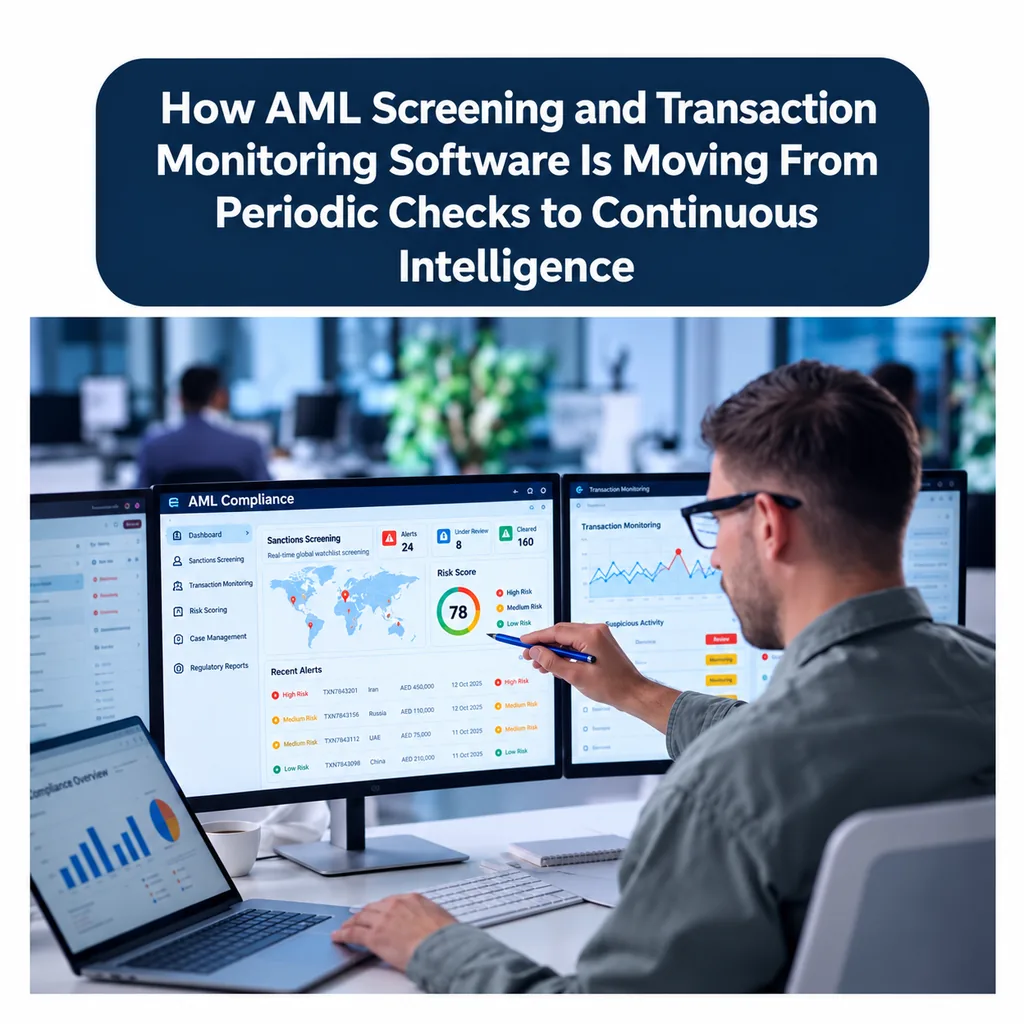
AML software exists to make this continuous approach achievable. A capable system typically provides several core functions:
- Sanctions and watchlist screening, checking customers and transactions against sanctions lists, PEP lists, and adverse-media sources, on an ongoing basis rather than once.
- Transaction monitoring, analysing transactions against expected patterns and flagging anomalies that may indicate money laundering.
- Risk scoring, maintaining a current risk rating for each customer that updates as circumstances change.
- Case management and reporting, helping the compliance team investigate alerts and file reports, including through the goAML portal.
Screening for Virtual Assets and the Travel Rule
For firms with any exposure to virtual assets, software has become especially important. With VASPs now fully within the AML framework, requirements such as real-time sanctions screening and the Travel Rule for cross-border virtual asset transfers apply, and these are difficult to meet manually. Software that can handle virtual asset transaction monitoring and Travel Rule data-sharing is increasingly necessary for firms in or connected to the crypto space, rather than a nice-to-have.
Choosing and Using Software Well
Software is a tool, not a complete compliance programme by itself. The value comes from choosing a system suited to the firm’s size, sector, and risk, configuring it properly so it reflects the firm’s actual risk profile, and having competent people to investigate what it flags. Poorly configured software generates either too many false alerts, overwhelming the team, or too few, missing real risk. This is why implementing AML software works best alongside expert guidance on how to configure and use it. Done well, the right software turns continuous monitoring from an impossible manual burden into a manageable, effective process that meets what regulators now expect.
ComplyFin provides AML/CFT software solutions in the UAE, including sanctions screening and transaction monitoring, alongside the expertise to configure and use them effectively for your sector and risk profile. If you need to move from periodic checks to continuous monitoring, we can help. Explore our AML software solutions or get in touch with our team.
Frequently Asked Questions
What does AML software do?
AML software typically provides sanctions and watchlist screening, transaction monitoring to flag anomalies, customer risk scoring that updates over time, and case management and reporting. Together these let a firm monitor for financial crime continuously rather than only at onboarding or in occasional batches.
Why is continuous monitoring better than periodic checks?
Because risk changes over time. A customer who was low-risk at onboarding may later appear on a sanctions list or transact suspiciously. Continuous screening and monitoring catches these changes as they happen, which is what regulators increasingly expect, whereas periodic checks leave gaps where risk goes unnoticed.
Do I need AML software if I deal with virtual assets?
It is increasingly necessary. With virtual asset providers fully within the AML framework, requirements such as real-time sanctions screening and the Travel Rule for cross-border transfers apply, and these are very difficult to meet manually. Software designed for virtual asset monitoring and Travel Rule data-sharing helps meet them.
Is AML software enough on its own for compliance?
No. Software is a tool within a compliance programme, not a substitute for one. Its value depends on choosing a system suited to your risk, configuring it to reflect your actual risk profile, and having competent people to investigate what it flags. Poorly configured software generates too many or too few alerts.
How do I choose the right AML screening software?
Match it to your firm’s size, sector, and risk profile, and ensure it covers the screening and monitoring your obligations require, including virtual assets if relevant. Because configuration is critical, choosing software alongside expert guidance on how to set it up and use it gives the best result.